
Confusion can be direct or indirect. Direct confusion involves the average consumer mistaking one mark for the other, while indirect confusion is where the average consumer realises the marks are not the same but puts the similarity that exists between them and the goods down to the responsible undertakings being the same or related. There is no scientific formula to apply in determining whether there is a likelihood of confusion; rather, it is a global assessment where a number of factors need to be borne in mind. The first is the interdependency principle i.e. a lesser degree of similarity between the goods may be offset by a greater degree of similarity between the marks, and vice versa.
UKIPO > Opposition > 16 March 2026, O/0221/26
□ put A down to B:AをBのせいにする、Aの原因をBに帰する
□ responsible:責任を有する、信頼できる
□ formula:定型句、公式、定式、慣習的やり方
□ bear in mind:心に留めておく、覚えておく
□ a number of:いくつかの、多数の
□ interdependency:相互依存、相互的な関係、持ちつ持たれつ
□ offset:相殺する、埋め合わせる
□ vice versa:逆に、逆もまた同様、反対に
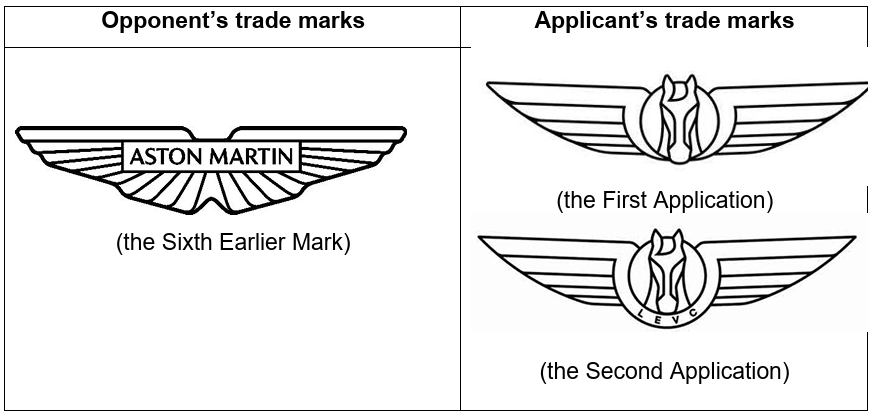
馬の頭部や「ASTON MARTIN」の文字の有無は、論理的且つ一貫性のあるブランド展開と捉えられる根拠に当たらず - 1
混同には、直接的混同と間接的混同がある。直接的混同とは、平均的な需要者が2つの商標を誤認することを指す。一方、間接的混同とは、平均的な需要者が両商標が同一ではないと認識しつつも、互いの商標及び商品が類似することから、同一又は関連する事業者によるものと捉える場合を指す。出所混同のおそれを判断する際に適用される科学的公式はなく、むしろ、多くの要素を踏まえた総合的な評価が必要となる。第一に、相互依存の原則である。すなわち、商品同士の類似性が低い場合でも、両商標の類似性が高ければ相殺され、その逆もまた然り。

indirect confusion puts the similarity that exists between them and the goods down to the responsible undertakings being the same or related.
「indirect confusion」は、日本では”広義の混同”と呼ばれており、需要者が、商標や商品の類似性又は関連性により、出所は異なると認識しつつも、事業者同士が経済的又は組織的につながりを有すると誤認してしまう場合が該当します。例えば、「CHANEL」のロゴが付された椅子を見れば、シャネルではないにせよ、シャネルから許諾を得た者による商品と思ってしまいます。