
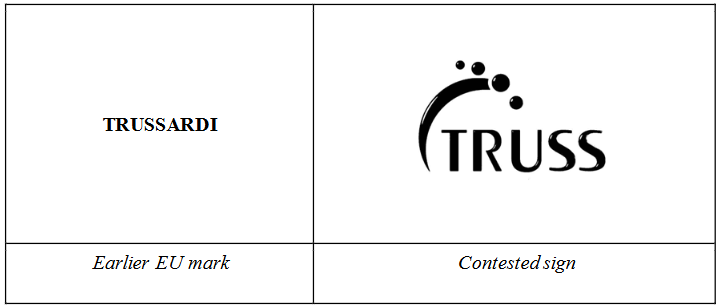
Phonetically, the signs coincide in the sound ‘truss’ at the beginning. Although the contested sign is shorter that the earlier one which has additional syllables, namely ‘ar’ and ‘di’, according to established case-law, consumers generally take more note of a mark’s beginning than of its ending. Moreover, the sound ‘truss’ is unusual in Spanish. Therefore, the signs are found to be aurally similar to an above-average degree.
As regards the conceptual comparison, the Opposition Division did not err in finding that such a comparison could not be made since the signs’ verbal elements have no meaning for the relevant consumers.
□ coincide:一致する、同時に起こる
□ at the beginning:最初、初め、始め
□ syllable:音節
□ take note of:〔情報・人の忠告・指示など〕~に注意を払う
□ as regards:~に関しては、~については
□ err in ~ing:~を誤る、間違いをする
外観の類似性は平均程度、称呼の類似性は平均以上 - 2
称呼上、両商標は「truss」の語頭音が一致している。被異議商標は、「ar」及び「di」の音が追加された先行商標より短いものの、確立した判例法によれば、需要者は、通常、商標の語尾よりも語頭を強く意識する。さらに、スペイン語において、「truss」の音は聞き慣れない。したがって、両商標の称呼の類似性の程度は平均以上と判断される。
観念の対比に関して、両商標の文字要素は関連需要者には何ら意味を有さないことから、観念は対比できないとした異議部の判断に誤りはない。

Consumers generally take more note of a mark’s beginning than of its ending
商標から生ずる称呼の音構成が比較的短い場合、語尾よりも語頭を強く意識することは、感覚として、左程ないように思いますが、音数が長くなってくると、読み始めの音を間違えないよう、語頭に注目するのは、確かにその通りです。「出だしが肝心」というのは、商標の世界においても通じる法則といえます。