
As confirmed by the General Court, the public is often confronted with terms and expressions or acronyms which it regards as descriptive even if it does not grasp the exact meaning of them.
Moreover, although the word ‘PET(S)’ may have different meanings depending on the language (e.g. ‘PET’ means ‘five’ in Croatian), particular account should be taken of the fact that the meaning of words may change according to their context (i.e. whether seen alone or in combination with other elements), and when seen in relation to the goods and services. Therefore, contrary to what the contested decision concluded, a significant part of the non-English-speaking public, when seeing the English word ‘PET(S)’ in combination with Class 20 goods destined for pets, is likely to perceive the word in the English sense.
□ confront with ~:~と直面する、向かい合う
□ acronym:頭字語(複数の単語の頭文字を組み合わせて作られた略語)
□ grasp:握る、つかむ、把握する、理解する
□ take account of ~:~を考慮に入れる、~に配慮する、~に気づく
□ context:文脈、前後関係、事情、背景
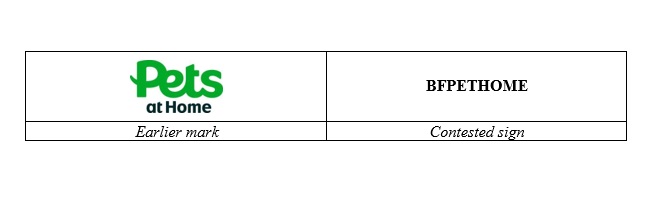
「Pets at Home」と「BE’PETHOME」は、出所混同のおそれなし - 4
一般裁判所が認めたとおり、公衆は、正確な意味を理解しないながらも、直面した用語や表現、頭字語を記述的表示とみなすことが多い。
さらに、「PET(S)」という語は、言語によって異なる意味を持つ可能性があるものの(例えば、クロアチア語で「PET」は『5』を意味する)、言葉の意味は、文脈(単独なのか、それとも、他の要素と組み合わされているか)や、商品・役務との関係で使用されているかによって変化するという事実を特に考慮すべきである。したがって、原決定の結論に反し、第20類のペット向け商品との関係において、英単語「PET(S)」を目にした非英語圏の公衆の大多数は、英語の意味で認識する可能性が高い。

the public is often confronted with terms and expressions or acronyms which it regards as descriptive even if it does not grasp the exact meaning of them.
確かに、言われてみると、見知らぬ外国語を目にした場合、その意味が分からないながらも、大した意味のない文言だろうと、気に留めずそのままスルーします。商標の識別力や類似性の判断には、法律知識だけでなく、大衆心理や行動に対する洞察、取引の実情の把握が必要であることが、この文章からも伺えます。