
Although direct confusion and indirect confusion both involve mistakes on the part of the consumer, it is important to remember that these mistakes are very different in nature. Direct confusion involves no process of reasoning – it is a simple matter of mistaking one mark for another. Indirect confusion, on the other hand, only arises where the consumer has actually recognized that the later mark is different from the earlier mark. It therefore requires a mental process of some kind on the part of the consumer when he or she sees the later mark, which may be conscious or subconscious but, analysed in formal terms, is something along the following lines: ‘The later mark is different from the earlier mark, but also has something in common with it. Taking account of the common element in the context of the later mark as a whole, I conclude that it is another brand of the owner of the earlier mark’.
UKIPO > Opposition > 4 February 2026, O/0094/26
□ indirect:二次的な、間接的な、遠回しの、真っ直ぐでない
□ on the other hand:一方で、反対に、他方では
□ subconscious:潜在意識の、意識下の
□ later mark:後願商標(↔earlier mark:先行商標)
□ in common with:~と共通して、~と同じように
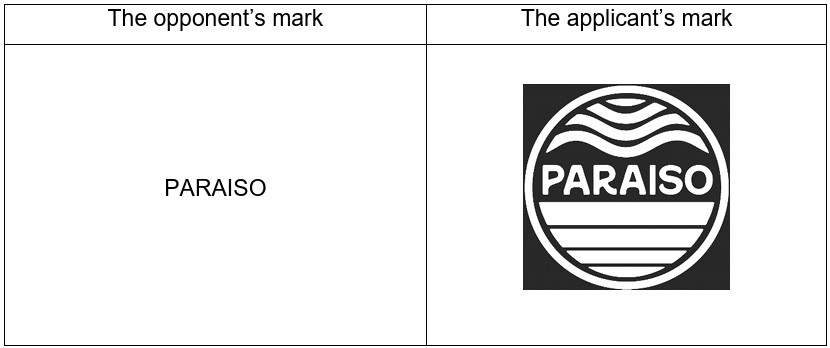
共通する「PARAISO」の使用は、需要者に両商標の出所混同を招く
直接的混同と間接的混同は、どちらも需要者の誤認を伴うが、これらの誤認は本質的に大きく異なる点に留意すべきである。直接の出所混同には推論の過程が存在せず、単純に、商標を別のものと誤認する事象である。一方、間接の出所混同は、需要者が、後願商標は先行商標と異なることを実際に認識した場合にのみ生じる。したがって、後願商標を見た需要者に、何らかの思考過程を必要とする。これは意識的な場合もあれば、無意識な場合もあるかもしれないが、堅苦しく分析すると次のような流れとなる:「後願商標は先行商標とは異なるものの、同時に共通点も有する。後願商標の構成全体における共通要素を考慮すると、後願商標は、先行商標権者の別ブランドと結論付けられる」。

Although direct confusion and indirect confusion both involve mistakes on the part of the consumer, it is important to remember that these mistakes are very different in nature.
出所混同には、「直接的混同」(direct confusion)と「間接的混同」(indirect confusion)があります。商標実務においては、直接的混同よりも、間接的混同を議論にする事案の方が圧倒的に多いです。他社の商標をそのまま真似するのは問題になり易く、直接的混同が生じるものは回避・敬遠されることが要因と思われます。先行商標権者でなくとも、組織的又は経済的に関連する事業者による商品・役務と需要者が認識すれば間接的混同に該当し、日本では「広義の出所混同」と呼ばれています。