The U.S. Court of Appeals for the Federal Circuit recently set forth the following “core principles” relevant to determining whether the ordinary U.S. consumer would stop and translate a foreign language mark into English:
– Because “words from modern languages are generally translated into English,” the party opposing translation has the burden to show that it is unlikely;
– The capability of the U.S. population to translate the word does not require “an absolute majority” but “an appreciable number of Americans;”
– Whether in context the mark would ordinarily be translated by a purchaser (from the U.S. population as a whole) with ordinary sensibilities because sometimes even a native speaker would not perform a literal translation because it would be irrelevant in the context of the specific goods, services, or market.
□ The U.S. Court of Appeals for the Federal Circuit:連邦巡回控訴裁判所
□ set forth:規定する、定める、詳しく述べる、明らかにする
□ capability:能力、才能、可能性、資質
□ apprciable:かなりの、相当の、重要な、理解[評価・判断]できる
□ in the context:of ~:~という文脈[背景]の中で、~という状況下にあって
□ sensibility:感受性、感覚、敏感さ
□ literal:文字どおりの、言葉本来の意味の、ありのまま、直接的な
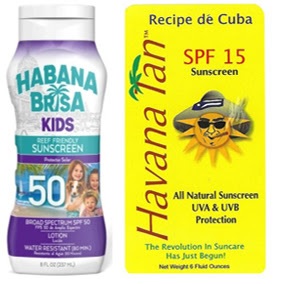
商標「HABANA BRISA」は、日焼け止め商品における「HAVANA TAN!」と出所混同のおそれあり ― 3
連邦巡回控訴裁判所は、最近、米国の一般消費者が外国語商標を英語に翻訳するか否か判断する際の「主たる基準」について、以下のとおり明らかにした:
・「現代の用語は一般的に英語に翻訳される」ため、翻訳に反対する当事者は、当該語が英語に翻訳され難いことの立証責任を負う;
・英語に翻訳することができる米国国民は、「絶対的多数」である必要はなく、「相当数の米国人」であれば足りる;
・米国国民全体のうち、通常の感覚を有する需要者が、文脈上、当該商標を普通に翻訳できるか否か。なぜなら、ネイティブでさえ、たまに、特定の商品や役務、市場との関係では不適切との理由で、言葉本来の意味通りに翻訳しないことがあるからである。

The U.S. Court of Appeals for the Federal Circuit
The U.S. Court of Appeals for the Federal Circuit(合衆国連邦巡回区控訴裁判所)。略称「CAFC」。日本の知財高等裁判所に相当する米国の司法機関が、CAFC。米国の司法制度において設けられた特別裁判所の一つ(1982年10月設立)で、関税や知的財産権に関する訴訟の控訴審、米国特許商標庁の審判における審決に対する訴え等を専属管轄としています。
CAFCは地域ではなく、事件の種類(知財、関税)で管轄が定められており、かつて、裁判所が現在のように特定の場所に固定されておらず、裁判官が各地を「巡回」して法廷を開いていたことに由来して、「巡回」(Circuit)が名前に残っているようです。