

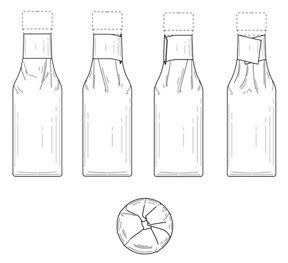
The evidence establishes a “reasonable predicate” for finding that Applicant’s Mark is not inherently distinctive, and thus establishes the Examining Attorney’s prima facie case. Although there are differences between Applicant’s product packaging configuration and the packaging of other bottles in the relevant field of use, these differences are not enough to rebut the Examining Attorney’s determination. As such, the third Seabrook factor is satisfied, which alone means Applicant’s Mark is not inherently distinctive. Accordingly, Applicant’s Mark is not so unique, unusual or unexpected in the relevant market that one can assume without proof that it will automatically be perceived by customers as an indicator of source.
USPTO > TTAB > In re Fee Brothers, Inc., Serial No. 90666517 (October 14, 2025)
□ predicate:基準、述語
□ prima facie case:一応有利な事件
□ configuration:形状、形態、態様
□ rebut:反駁する、反論する、反証する
□ assume:推定する、当然のこととして前提する、引き受ける
出願人の商品容器の立体形状は、自他識別力を有するか? ― 2
証拠は、出願人商標が本来的に自他識別力を有しないことを認めるに足る「合理的根拠」を示しており、一応、審査官の判断に有利な事案といえる。出願人の商品容器の形状と、関連業界における他の瓶容器との間には差異が存在するものの、当該差異は審査官の判断を覆すには不十分である。したがって、Seabrook事件の3番目の要因により、出願人商標は本来的に自他識別性を有しないものと判断される。そうすると、出願人商標は、証明なくとも需要者が直ちに出所表示と認識すると捉えるには、あまりに、独自性・特異性・予測不可能性を欠く。

Inherently Distinctive
商標の“自他識別力”のことを、英語で「dictinctive character」といいますが、この識別力は、さらに、「本来的な識別力」と「獲得された識別力」に区別されます。「本来的識別力」が「inherently distinctive」で、商標の構成文字(図形)が元来有する意味によって、識別力の有無が決まります。一方、「獲得された識別力」は「acquired distinctive」で、商標を実際に使用した結果、元来の意味よりも、出所表示として認識されるようになったものが該当します。日本では、商標法第3条第2項に規定されており、「特別顕著性」と呼ばれています。

